
Thinning hair has become an increasingly common concern for people looking for practical ways to improve the appearance and quality of their hair. In 2026, interest in peptide-based cosmetic and regenerative approaches is growing, with hair filler formulations receiving attention as part of the broader evolution of non-surgical hair-care solutions.
Unlike traditional hair-restoration procedures that may involve surgery or transplantation, hair fillers are generally discussed as injectable formulations designed to support the scalp and hair environment. Their ingredients, mechanisms, expected results, and suitability can vary significantly between products, making informed evaluation especially important.
This guide explains how hair fillers for thinning hair work, what they may offer for thinning hair, what to consider before treatment, and how to evaluate products and providers responsibly.
Key Takeaways
Hair fillers are injectable formulations designed to support the scalp and improve the appearance of thinning hair.
Different formulations can contain peptides, hyaluronic acid, amino acids, vitamins, or other cosmetic and bioactive ingredients.
Results depend on factors such as the cause of hair thinning, formulation, treatment protocol, and individual response.
Proper assessment by a qualified professional is important before choosing an injectable hair treatment.
Product quality, regulatory status, practitioner expertise, and realistic expectations should guide decision-making.
What Are Hair Fillers?
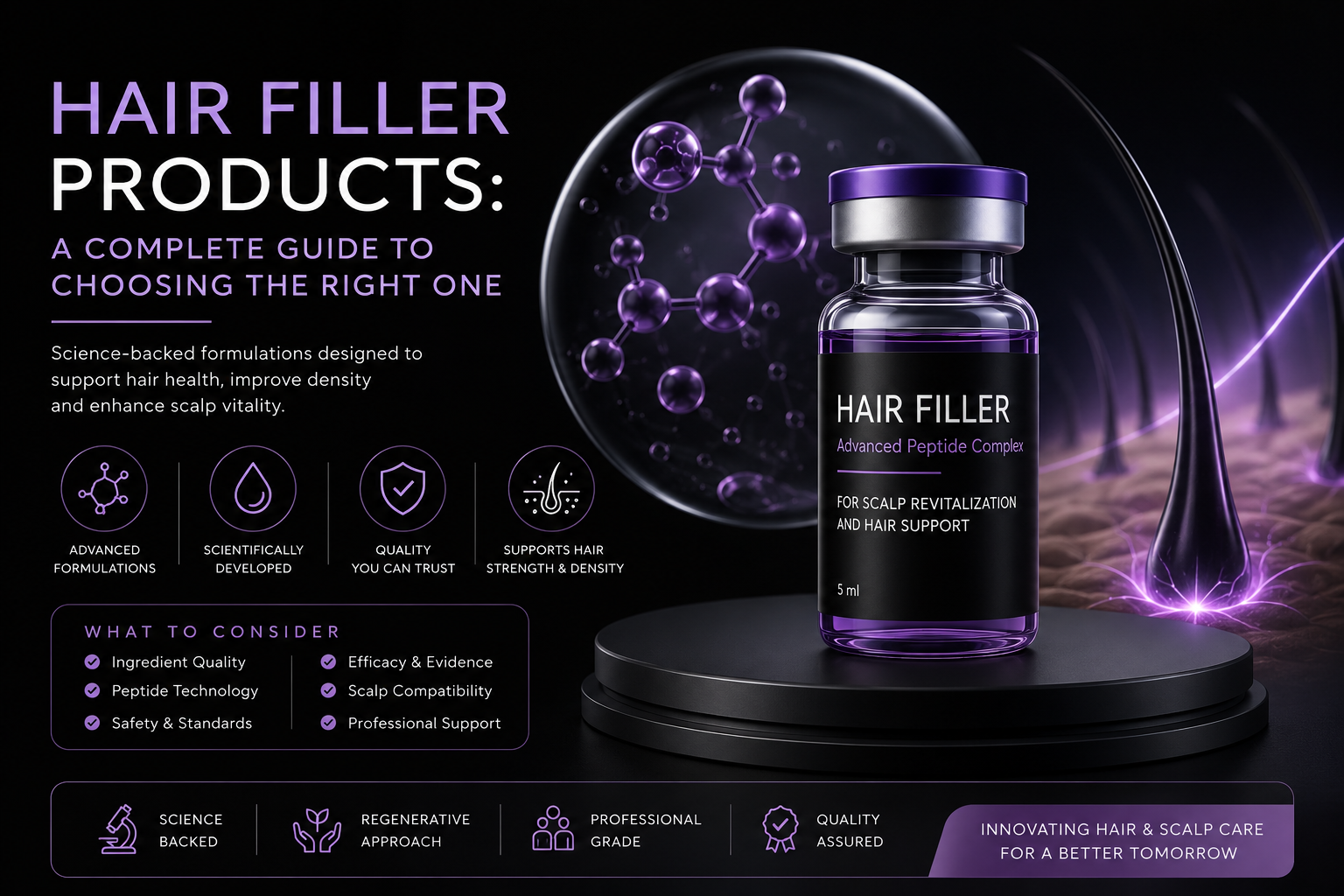
Hair fillers are injectable products developed for use on the scalp and are intended to address concerns associated with thinning or weakened-looking hair. The term “filler” can be misleading because these products are not necessarily designed to create physical volume in the same way that traditional facial dermal fillers do.
Many modern formulations focus on combinations of active ingredients intended to support the scalp environment. Depending on the product, these may include peptides, hyaluronic acid, amino acids, minerals, antioxidants, or other compounds.
The exact composition matters. A product's proposed benefits should always be assessed according to its formulation, intended use, available evidence, and regulatory status rather than the word “filler” alone.
Why Is Hair Thinning So Difficult to Manage?
Hair thinning can have multiple causes, and identifying the underlying issue is an important first step.
Genetics can play a major role, particularly in androgenetic or pattern hair loss. Hormonal changes, nutritional deficiencies, stress, certain medications, scalp conditions, and other factors can also influence hair density and growth.
Another challenge is that hair changes gradually. Someone may notice a widening part, increased scalp visibility, reduced ponytail volume, or more hair shedding before realizing that overall density has changed.
Because different causes require different approaches, a cosmetic injectable should not automatically be viewed as a universal solution for hair loss.
How Do Hair Fillers for Thinning Hair Work?
The mechanism depends heavily on the formulation used. Some products are developed around peptide complexes, while others combine multiple ingredients intended to condition or support the scalp.
Peptide-based formulations are particularly relevant to the current interest in regenerative cosmetic technology. Peptides are short chains of amino acids that can participate in biological signaling, although the effects of a particular peptide depend on its structure, concentration, delivery system, and supporting evidence.
Some formulations may also use hyaluronic acid or other components to provide a suitable environment for active ingredients. However, consumers should distinguish between a product's theoretical mechanism and clinically demonstrated outcomes.
A reputable treatment provider should be able to explain what the product contains, how it is intended to work, what evidence supports its claims, and what limitations apply.
Potential Benefits of Hair Fillers
The potential benefits depend on the product and the individual. Commonly discussed objectives include improving the appearance of thinning areas, supporting healthier-looking hair, and enhancing the overall condition of the scalp.
Improved Appearance of Hair Density
One reason people consider injectable scalp treatments is the desire for hair to appear fuller. This may be particularly relevant when thinning has made portions of the scalp more visible.
However, perceived density and actual increases in hair count are not the same thing. Before-and-after photographs should therefore be interpreted carefully, considering lighting, hairstyle, hair length, and photography conditions.
Targeted Application
Injectable treatments can be administered to specific areas of concern rather than applied broadly like a conventional topical product.
This targeted approach may be useful when thinning is concentrated around areas such as the crown, temples, or parting. Treatment plans should nevertheless be individualized rather than based solely on a standard injection pattern.
Non-Surgical Approach
For people who are not considering surgical hair transplantation, injectable options may represent a less invasive category of aesthetic treatment.
This does not mean they are risk-free. Any procedure involving injections can have potential complications, including pain, swelling, bruising, infection, or other adverse reactions.
Peptide-Based Innovation
Peptide technology is one of the areas receiving increased attention in modern aesthetic and cosmetic research. Depending on the formulation, peptides may be incorporated to support specific biological or cosmetic objectives.
Organizations developing these products should prioritize transparent ingredient information and evidence-based communication instead of relying solely on broad claims about “regeneration” or “stem-cell-like” effects.
Hair Filler Treatment: What Should You Expect?
A typical injectable scalp session begins with an assessment of the individual's hair and scalp. The practitioner may review medical history, medications, allergies, previous treatments, and the pattern of hair thinning.
The scalp may then be cleaned and prepared before the product is administered using multiple small injections in the targeted areas.
The exact technique varies according to the formulation and treatment protocol. Injection depth, volume, spacing, and number of sessions should be determined by a trained professional familiar with the specific product.
After treatment, temporary redness, tenderness, swelling, or small bumps may occur. Patients should receive clear aftercare instructions and know which symptoms are expected and which require professional attention.
Who May Consider Injectable Hair Fillers?
Hair fillers may be considered by adults experiencing certain forms of thinning hair who are looking for non-surgical cosmetic approaches.
Suitability should be determined individually. A person with sudden or unexplained hair loss may need medical evaluation before considering an aesthetic procedure.
Similarly, people with active scalp infections, certain inflammatory scalp disorders, allergies to product ingredients, or other relevant conditions may require alternative management.
The most appropriate starting point is therefore assessment rather than immediately selecting a product.
How to Choose a Hair Filler Product
Choosing a product requires more than comparing marketing claims. Several factors should be evaluated.
Review the Ingredient Profile
Look for clear information about the formulation and active ingredients. Avoid products that provide vague descriptions without explaining what is actually contained in the formulation.
If peptides are included, determine whether the manufacturer provides information about the specific peptide technology and its intended function.
Check Regulatory and Quality Information
Regulatory requirements differ between countries and product categories. Buyers and providers should verify the product's intended use, regulatory status, manufacturing information, and applicable quality certifications.
A professional-looking website alone should not be treated as evidence of product quality.
Examine Available Evidence
Clinical evidence is especially important when a product makes claims about hair density, growth, or biological effects.
Ideally, evidence should relate directly to the specific formulation rather than simply referencing research conducted on an individual ingredient under different conditions.
Evaluate the Practitioner
Even a well-designed product requires appropriate administration. Practitioners should have suitable qualifications, relevant injection training, knowledge of scalp anatomy, and experience with the specific treatment.
A consultation should provide an opportunity to discuss expected outcomes, risks, alternatives, and aftercare.
Best Practices for Clinics and Educators
Clinics, training institutions, and organizations introducing hair-filler technologies can improve treatment quality by establishing standardized protocols.
First, practitioners should document the patient's baseline condition using consistent photographs and assessment methods. This makes subsequent comparisons more meaningful.
Second, providers should maintain detailed records of the product used, batch information, treatment areas, dosage, injection technique, and follow-up observations.
Third, patient education should clearly distinguish cosmetic improvement from treatment of an underlying medical condition. Marketing materials should avoid guaranteeing results or presenting emerging technologies as universally effective.
Training should also include complication recognition, infection-control procedures, contraindications, product storage requirements, and appropriate referral pathways.
How Long Do Results Last?
The duration of results varies according to the formulation, treatment schedule, individual biology, and underlying cause of hair thinning.
There is no single timeframe that applies to every injectable hair-filler product. Some protocols involve a series of sessions followed by maintenance treatments, while others may use different schedules.
Patients should ask providers how long results were observed in studies of the specific product and whether maintenance treatments are normally recommended.
It is also important to understand that injectable treatments do not necessarily stop the biological processes responsible for progressive hair loss.
Hair Fillers vs. Other Hair-Loss Approaches
Hair fillers are only one category within the wider hair-restoration landscape.
Topical and oral medications may be appropriate for certain types of hair loss, depending on medical assessment. Platelet-based procedures, low-level light approaches, scalp treatments, and hair transplantation are other options that may be considered in appropriate circumstances.
The right approach depends on the diagnosis, severity, treatment goals, risk tolerance, budget, and expected timeline.
For this reason, comparing treatments based only on advertised benefits can be misleading. A more useful comparison considers evidence, safety, suitability, maintenance requirements, and realistic outcomes.
Questions to Ask Before Treatment
Before proceeding, consider asking:
What is causing my hair thinning?
What exactly is contained in the product?
Is the product intended and approved for this use in my country?
What clinical evidence supports the formulation?
Who will administer the injections?
How many sessions are typically recommended?
What side effects and complications should I know about?
What alternatives might be appropriate?
How will progress be measured?
Clear answers to these questions can help patients make more informed decisions.
What Does the Future Hold for Hair-Filler Technology?
The broader direction of aesthetic medicine is increasingly focused on targeted delivery systems, biomimetic ingredients, peptides, and minimally invasive procedures.
Future developments may focus on improving ingredient stability, delivery, personalization, and clinical validation. However, innovation should be accompanied by stronger evidence and transparent communication.
For consumers, this means looking beyond trends and asking whether a specific product has credible evidence supporting its specific claims.
Contact Us
If you are exploring modern approaches to thinning hair, take the next step by learning about the formulation, technology, treatment protocol, and evidence behind the product you are considering. A professional consultation can help determine whether an injectable approach is appropriate for your individual needs and expectations.
For those researching peptide-based scalp technologies, myelyara represents an example of innovation within the evolving aesthetic and hair-care space, with a focus on technology and product development. As the field continues to develop, informed evaluation, professional guidance, and evidence-based decision-making remain essential.
Frequently Asked Questions
1. Are hair fillers for thinning hair suitable for everyone?
No. Suitability depends on the cause and pattern of hair thinning, overall scalp condition, medical history, allergies, medications, and treatment goals. People with sudden, severe, or unexplained hair loss should seek appropriate medical evaluation before pursuing an injectable cosmetic treatment.
2. How do hair fillers for thinning hair differ from hair transplantation?
Hair fillers are generally injectable treatments that do not involve surgically relocating hair follicles. Hair transplantation, by contrast, involves transferring follicles from one area of the scalp to another. They have different procedures, indications, risks, recovery considerations, and expected outcomes.
3. Can peptide-based hair fillers make thinning hair look fuller?
Some formulations are designed with the goal of improving the appearance or condition of thinning hair, but outcomes vary by product and individual. Claims about increased density should be evaluated using evidence relating to the specific formulation rather than generalized claims about peptides.
4. How many sessions are needed for injectable hair fillers?
There is no universal schedule. The recommended number of sessions depends on the specific product, treatment protocol, scalp condition, and individual goals. A qualified practitioner should explain the proposed schedule and whether maintenance sessions may be necessary.
5. Are injectable hair fillers safe?
Safety depends on the product, administration technique, practitioner qualifications, and individual factors. Temporary discomfort, redness, swelling, bruising, or tenderness can occur after injections. Patients should discuss contraindications and potential complications with a qualified healthcare professional before treatment.


Write a comment ...